0%
Creating a Collection
A collection is essentially a bridge between a specific table in your database and the Provably platform. This is how you define exactly what data is available for proof generation.
1. Select your Table
First, browse through your connected database to find the specific table you want to use.
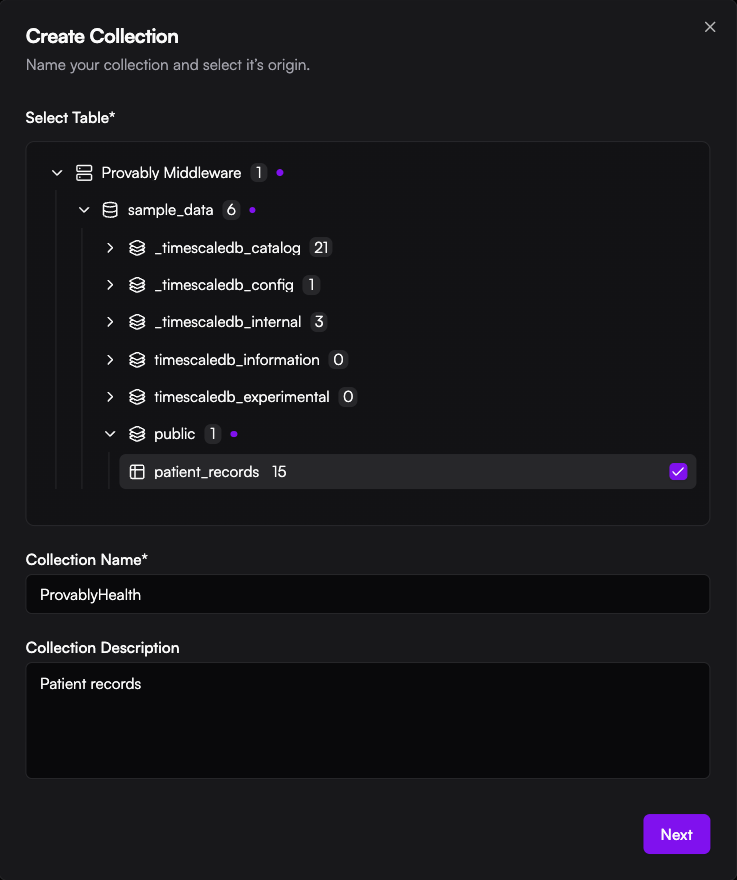
- Identify the Source: Drill down through your connected sources and select the correct table.
- Naming: Give your collection a Name and a Description so you know exactly what this dataset contains.
2. Choose your Columns
You don’t have to share everything. This step lets you pick the specific data points you want to include in the collection.
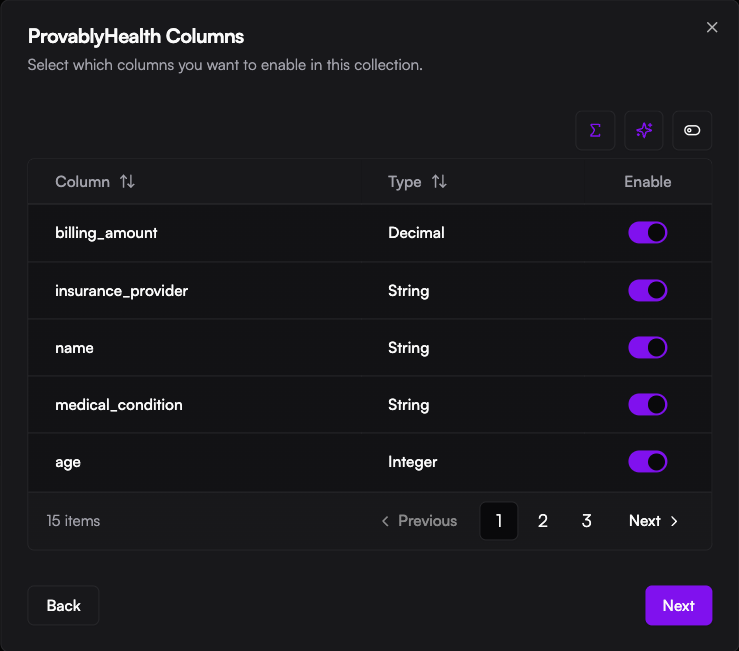
- Enable/Disable: Use the toggles to select columns.
- Privacy by Design: Only the columns you enable here will be accessible for queries and proofs.
3. User Access
Decide who else can interact with this collection.
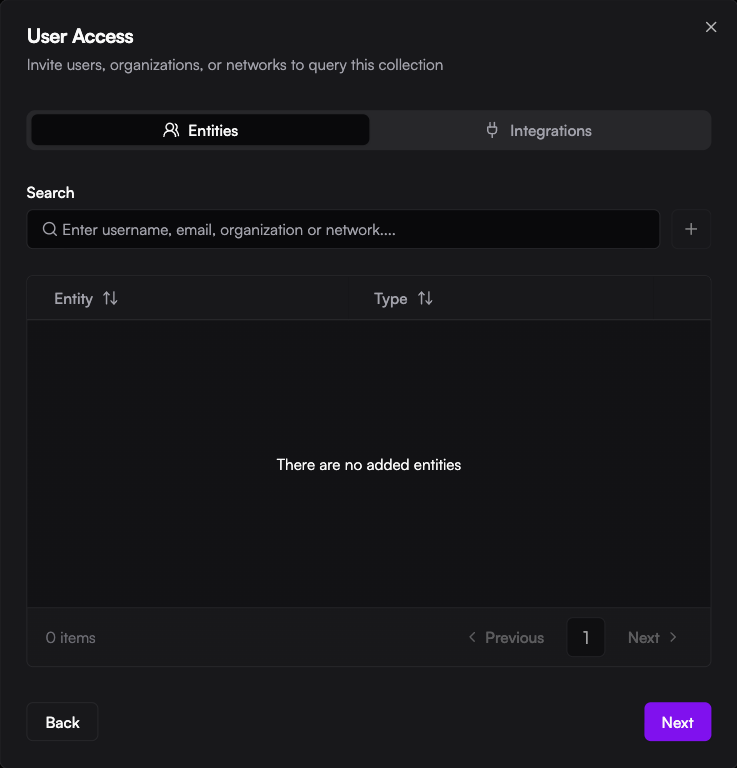
- Grant Access: You can search for specific users or organizations to give them collection access.
- Skip for Now: If you aren't ready to share, just hit Next. You can always manage permissions from the collection settings later.
4. Set Status & Price
Finally, decide how this collection appears to the world and what it costs to use.
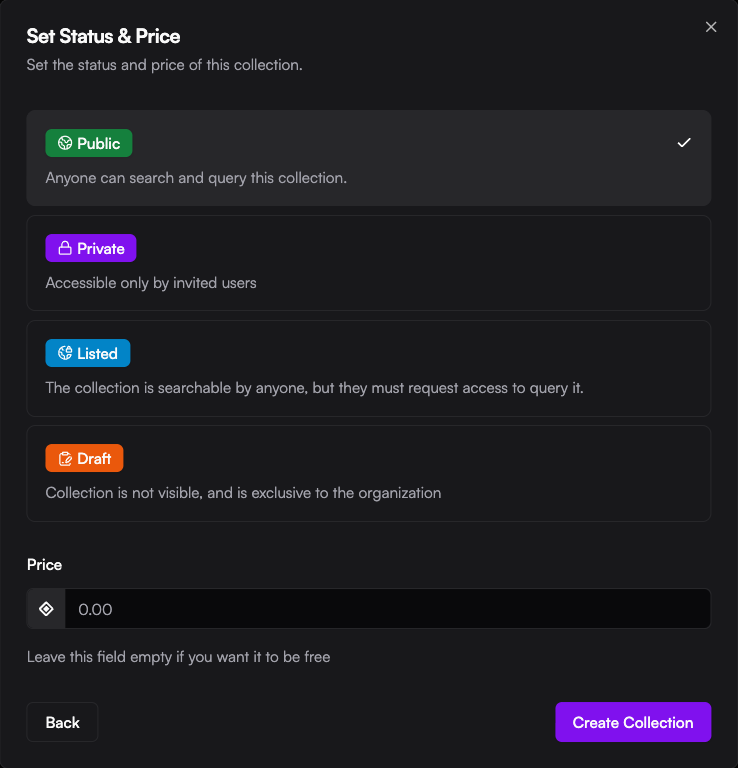
Visibility:
- Public: Anyone can search for and query this data.
- Private: Only invited users can see it.
- Listed: Anyone can see it exists, but they must request access to query it.
- Draft: Hidden from everyone except your organization.
- Set a Price: Enter a value to represent the cost of running a single query on this database. If you want it to be free to use, just leave this field empty.
Note on Pricing: For now, every query has a fixed cost based on the amount you set here. Custom costs for different types of queries are available upon request.